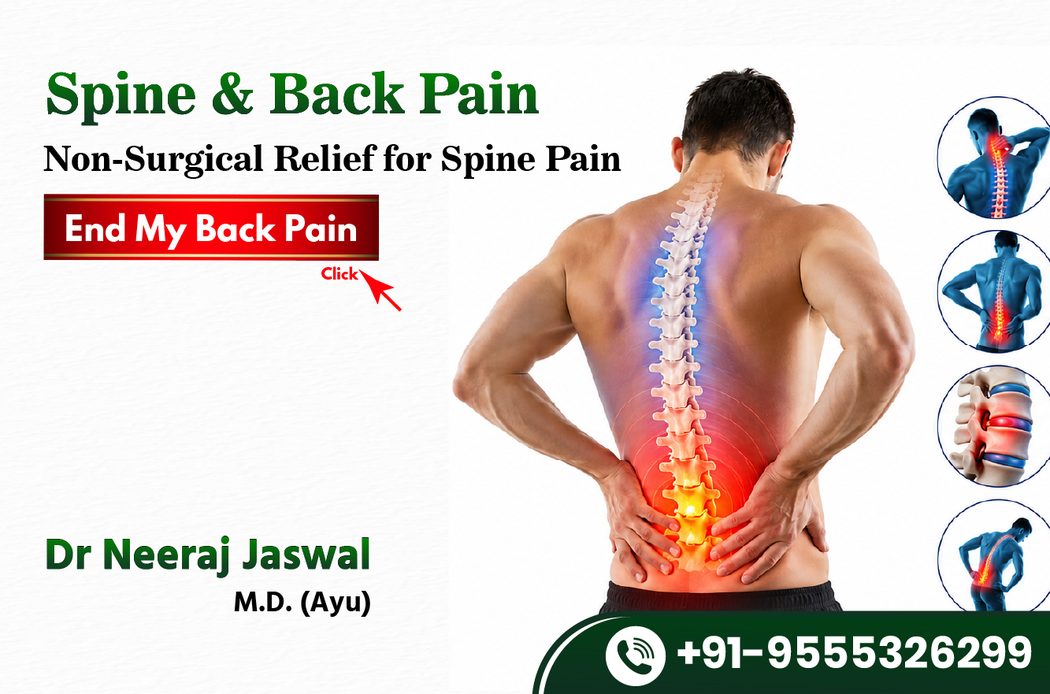
Panchakarma For Spine Problem — Ayurvedic Treatment in Delhi
Spine Problems and Its Solution in Ayurveda Panchakarma
The Spine is the second core of your body. It connects your upper body to the lower part and transfers weight. The spine is a really important and delicate part of our body, 80 to 85% of people report back problems once upon a time in their life, and 10 to 15% of sports injuries are contributed by the spine.
In today's technologically advanced world we are losing our grip from our body, and long sitting hours, less physical activity, poor nutrition, improper positions all are contributing to bad spinal health and restricted activity.
What is Spine and its Structure
The spine is situated in the backside of the back. This bony structure starts from the base of the skull and runs down to the pelvis. The spine is not a single bone but a collection of 33 small tiny bones stacked together like blocks and separated by discs (a shock absorber in between the bones to protect it from injury).
We can divide the spine into Bones (vertebras), Nerves (spinal cord), and Discs (intervertebral discs). If we see the spine from front or back, it seems straight. But from the side, it is an 'S' shaped structure with curves: Cervical bending (neck), Lumbar bending (lower back), Thoracic bending (chest), and Sacral bending (hips).
The spinal cord runs through the vertebras and is vital for controlling motor function (muscle movements) and sensory functions (senses like pain, touch, hot and cold).
The Intervertebral Disc
The third and most important part of the spine is the intervertebral disc. They are fibrous tissue filled with a jelly-like substance acting as great shock absorbers.
The problem starts when the outer fibrous tissue gets weakened and this jelly starts protruding out, compressing the spinal cord or nerves. This is generally known as sciatica, cervical slip disc, or IVDP (intervertebral disc prolapse).
Common Spinal Problems Treated
Ayurveda and Panchakarma in Spinal Problems
Spinal diseases are almost always very severe and serious. Modern science has its limitations, often resorting to invasive surgeries. Ayurveda, on the other hand, with tools like Panchakarma and herbal medicines, plays an incredibly nurturing role.
Most problems in the spinal area are dominated by Vata dosha. Ayurveda treatments like Basti (Anuvasana and Niruha), Nasya, Virechana, Local Abhyangam, Kati Basti, Greeva Basti, and Shashtik Shali Swedana provide tremendous, long-lasting relief.
Panchakarma Therapies Used in This Department
Commonly prescribed classical therapies: Abhyangam (Herbal Oil Massage) · Basti (Medicated Enema) · Shirodhara — eligible cardholders can avail these under our CGHS cashless panel.
Schedule Your Intake for Spine & Back Problems
Your first consultation includes a comprehensive pulse diagnostic check and complete review of your treatment options.
Book a Consultation arrow_forward